
Thermal Roof Inspections.
Temperature, mapped clearly.
Thermal roof inspections use a radiometric FLIR payload flown over your flat roof at first light, surfacing temperature anomalies that may indicate trapped moisture, insulation gaps, or heat loss when conditions are appropriate.
Thermal imaging is condition-dependent and does not guarantee leak detection. Confirmation may require a roofing contractor, moisture testing, core sample, or other qualified evaluation.
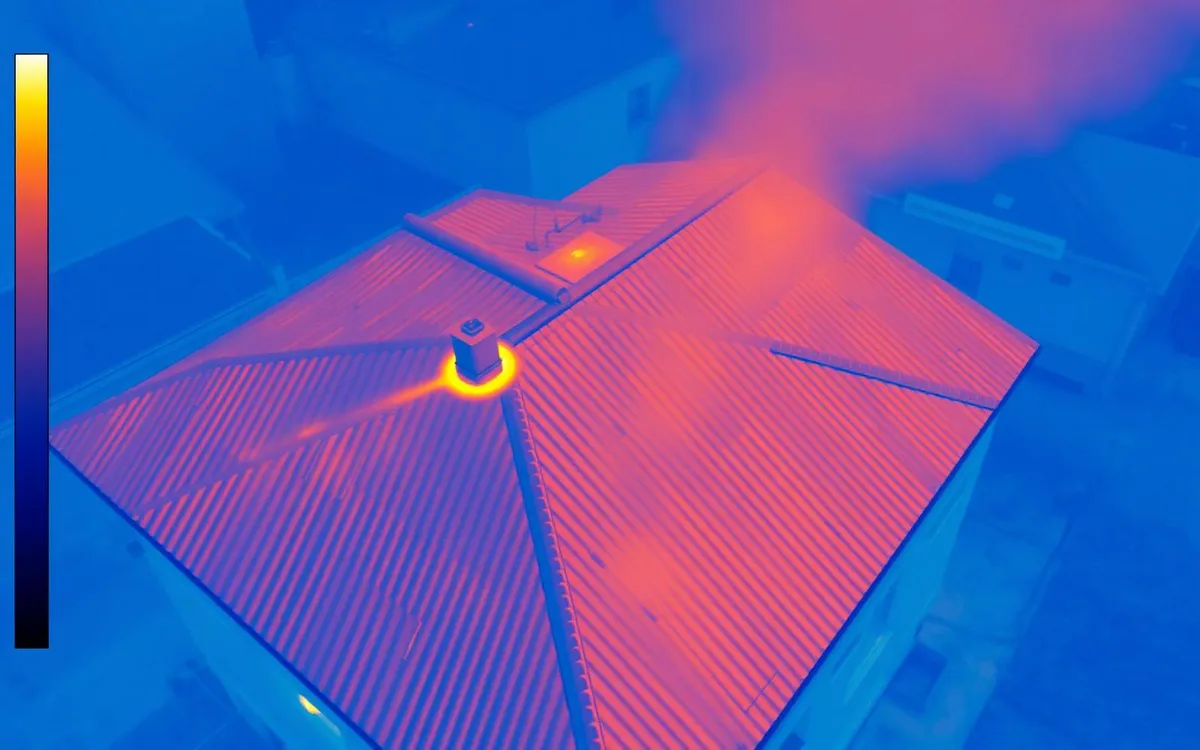
Moisture
Wet insulation can retain heat longer than dry insulation, which may show up as a contrast in early morning thermal imagery.
Membrane
Punctures, split seams and slipped flashings can emit distinct thermal signatures worth investigating.
HVAC loss
Duct leaks and unit issues can show up as anomalous heat signatures on the roof deck, worth a closer look.
Pilot program
Priority slots for the first fifty commercial roofs.
We are calibrating the payload against real Cincinnati and Northern Kentucky buildings. Pilot participants get the first flight at cost and the first full report free.
Join the waitlistCommon questions
When will thermal roof inspections be available?
Thermal roof inspections launch in 2026 and are currently in a pilot. You can join the waitlist now.
What can thermal imaging find on a roof?
Radiometric thermal imaging can help identify roof temperature anomalies that may point to trapped moisture, insulation gaps or heat loss on commercial flat roofs, when conditions are right.
Does thermal imaging guarantee it will find a leak?
No. Thermal imaging depends on conditions and does not guarantee leak detection. It works best on flat commercial roofs.
While thermal launches
Book a flight in
under a minute.
Same-day scheduling across Greater Cincinnati and Northern Kentucky. Reports delivered within 24 hours of flight.